
People search “ligo reviews” when they want the short answer: does this tool actually help?
I get it - before you sign up for anything, you want real feedback from real users. So I put together everything I think matters: the reviews we’ve collected, the trends I see, how I reply when someone points out a problem, and how you should read any review list (including ours).
I write this as someone who reads every piece of feedback that comes in. I’m not hiding anything. I’ll show what customers praise, where we’ve slipped up, and what we changed because of what they told us.
The short answer to “ligo reviews?”
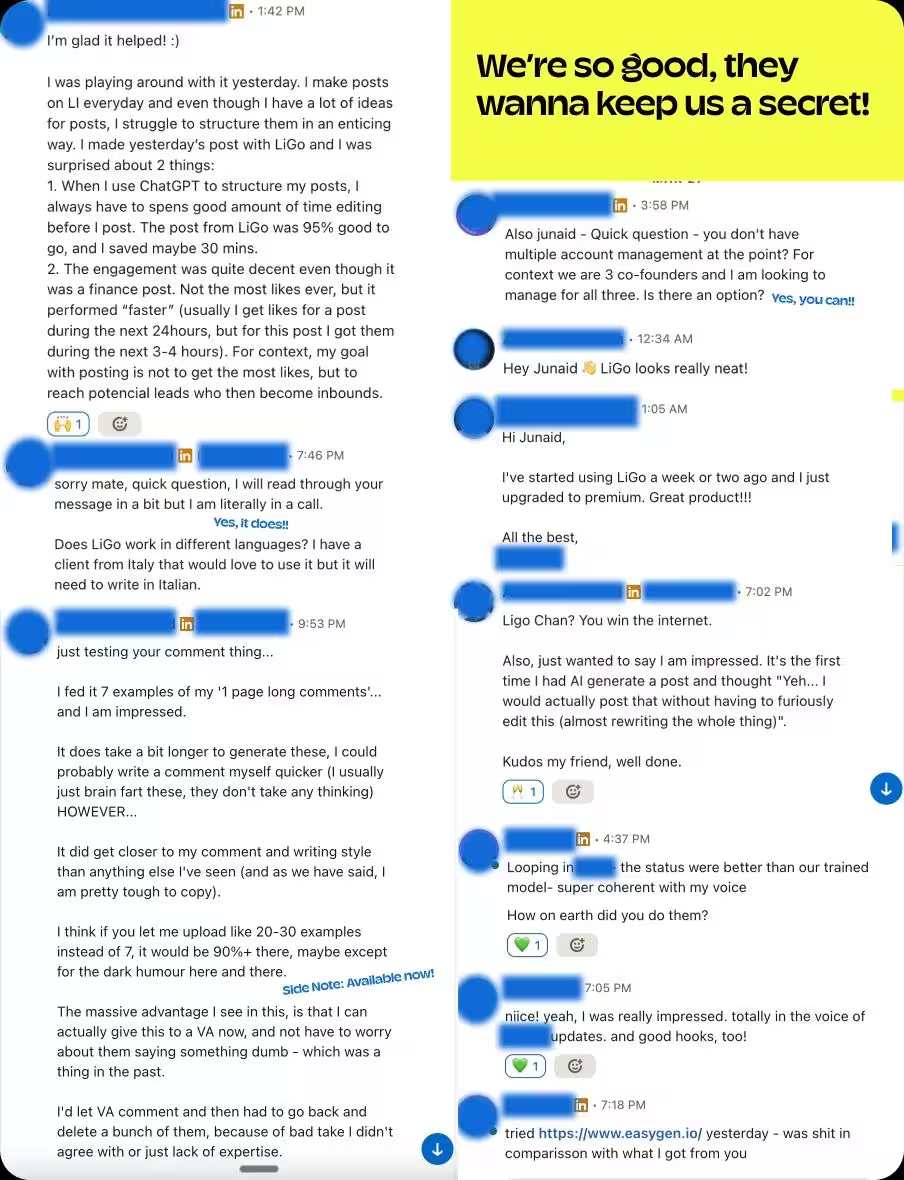
Most people say LiGo works for the thing they tried it for: formatting LinkedIn posts, generating better LinkedIn summaries, and helping teams keep brand voice steady.
Reviews that stand out are specific: they mention a time saved, a clearer post, or a recruiter reaching out after a profile update.
Negative reviews mostly point to two things: a missing feature someone expected, or confusion during the first run. Both are fixable, and we treat those reviews as direct to-do items.
If you’re scanning for one lesson: look for specifics in reviews (what exactly improved?) and how the company responds. Both give you real clues.
What reviewers often praise (and why I care)
When I read the good reviews, a few themes pop up again and again:
- Saves time. People say they can format and post faster. That matters because posting consistently is what drives results.
- Makes posts readable. Several reviewers told stories: before LiGo, they posted long walls of text; after, they got more comments and shares.
- Keeps tone consistent. Teams using LiGo for LinkedIn announcements say their posts feel like the same “voice” now, which helps trust.
Those are the kinds of wins I care about because they’re measurable. “It’s nice” is not a review I spotlight, “I got a reply from a recruiter” is.
Examples
I don’t publish full private messages, but these paraphrased snippets capture the real feedback we got in the last few months:
“LiGo cut the time to prepare my weekly post from 40 minutes to 10.” - product manager, tech startup.
“We used the LinkedIn About generator. I got two messages within 48 hours from hiring managers.” - mid-level marketing lead.
“First impressions were buggy; the formatter didn’t keep bullet spacing for one post. Support fixed it and replied the same day.” - agency social manager.
The first two are examples of the upside. The third is honest feedback about a hiccup and what we did next. I include that because it shows how we handle problems - quickly and openly.
The negatives - what people complain about and how I reply
No product is perfect. When people leave harsh reviews, I read them as instructions.
Common complaints I see in "ligo reviews":
- Missing a tiny feature someone expected. Maybe a specific markdown style or an export format.
My reply: tell me exactly what you need, if it’s widely requested we add it. If it’s very niche, we may build a quick workaround and add it to our how-to guide.
- First-time confusion. People expect the app to behave like Word or Notion. LinkedIn has limits that make copy/paste behave oddly.
My reply: we added clearer first-run tips and a short video showing the exact copy-paste flow that keeps formatting intact.
- Edge-case bugs. These happen.
My reply: we triage, fix, and publish changelogs so users know we’re on it.
When I answer a negative review publicly I aim for three things: acknowledge, fix (or explain), and follow up. That shows people we care and that reviews aren’t ignored.
How I turn reviews into product changes
I don’t want reviews to sit in a file. Here’s a quick pattern we use:
- Collect - every review goes into the same tracker.
- Tag - is it a bug, a feature request, or general praise?
- Prioritize - customer impact + number of similar requests = priority.
- Ship small fixes fast - quick wins go out in days; bigger features go into the roadmap.
- Reply publicly - we post a short reply to the reviewer and update the review thread once it’s fixed.
That last step matters. When people search “ligo reviews” they don’t just want praise, but they want to see the conversation. A review and a reply together tell a story.
How to read any review list (including ours)
When you read “ligo reviews” or any app reviews, I recommend a quick checklist:
- Look for specifics. Did the user say what changed? (“Saved me 30 minutes” vs “Great app.”)
- Look at how the company replied. A fast, helpful reply is a strong signal.
- Check dates. Newer reviews often reflect recent releases.
- Watch for repeated themes. If multiple people say the same issue, it’s real.
- Balance praise and complaints. A mix is normal - a page of only 5-star praise without details is suspicious.
If you follow that checklist, you’ll make faster, better decisions.
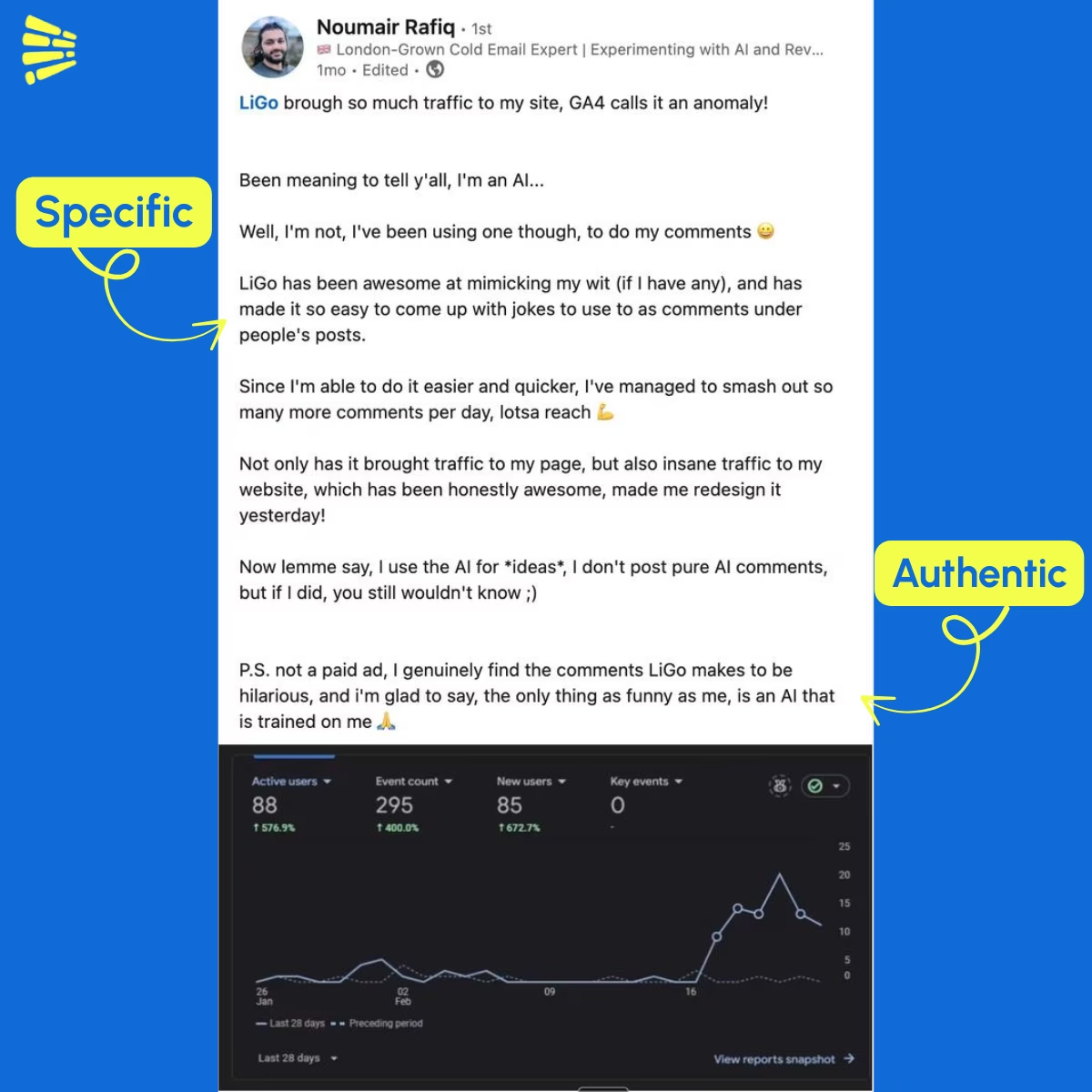
My favorite real review (and why it matters)
A short quote that stuck with me:
“I used LiGo for one month and my posts finally got consistent. My network grew and recruiters started messaging.”
I’m keeping this short because I want to respect privacy, but this review matters because it names outcomes: consistency → visibility → opportunities. That’s the exact chain we aim to help with.
If you’re looking for “ligo reviews” right now - where to look
- Our Testimonials Page for all LiGo testimonials/reviews.
- Our blog posts where customers explain what changed and how they use LiGo. (See Next Resources below.)
- The app’s review section (where people write short experiences).
- Independent review sites - take each review with the checklist from above.
FAQ
Q - Are LiGo reviews real?
Yes. We vet reviews lightly for spam, and we keep a record of the conversations behind each review. If you want extra proof I can share anonymized screenshots.
Q - Do you pay for positive reviews?
No. We don’t pay for reviews. We do offer users a small discount for detailed case-study participation, and that’s clearly labeled.
Q - I left negative feedback - will you respond?
I will. I read them all and try to reply in 24–48 hours for support-level issues.
Q - Are the reviews biased toward one industry?
We see a lot of people in marketing, HR, and startup roles, but the tool helps anyone who posts on LinkedIn.
Final thoughts - what “ligo reviews” should tell you
When people search “ligo reviews,” they want a simple answer: will this help me? The honest answer is: it depends on what you want LiGo to do for you. But if you value clearer LinkedIn posts, faster post production, and a small boost in how your profile reads, then the reviews we’ve collected show LiGo delivers for many real users.
I’ll keep tracking reviews, replying to them, and turning feedback into real changes. If you want, tell me what matters to you and I’ll point you to a few reviews that match - or I’ll send some anonymized screenshots that prove our claims.
Next resources
- Read about how formatting changes engagement: “Why Your LinkedIn Posts Are Invisible.”
- Tips for LinkedIn summaries: “LinkedIn Summary Generator - Why 95% of Summaries Fail.”
- About pages that convert: “LinkedIn About Generator - Your Profile Is Costing You Jobs.”
- Pricing and plans: try LiGo (Standard and Pro plans)