
Key findings
- AI-sounding posts: -22% engagement, -19% comments vs the same author's other posts that year.
- The gap holds within the same post type (-15%), topic (-16%) and format and length (-16%).
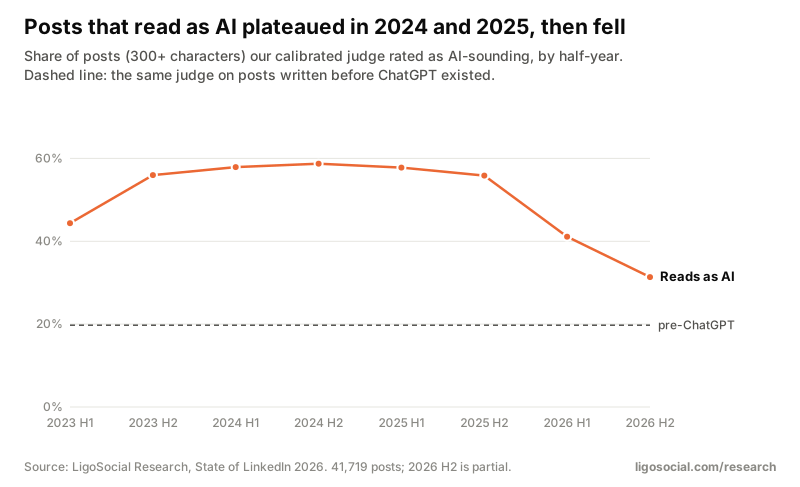
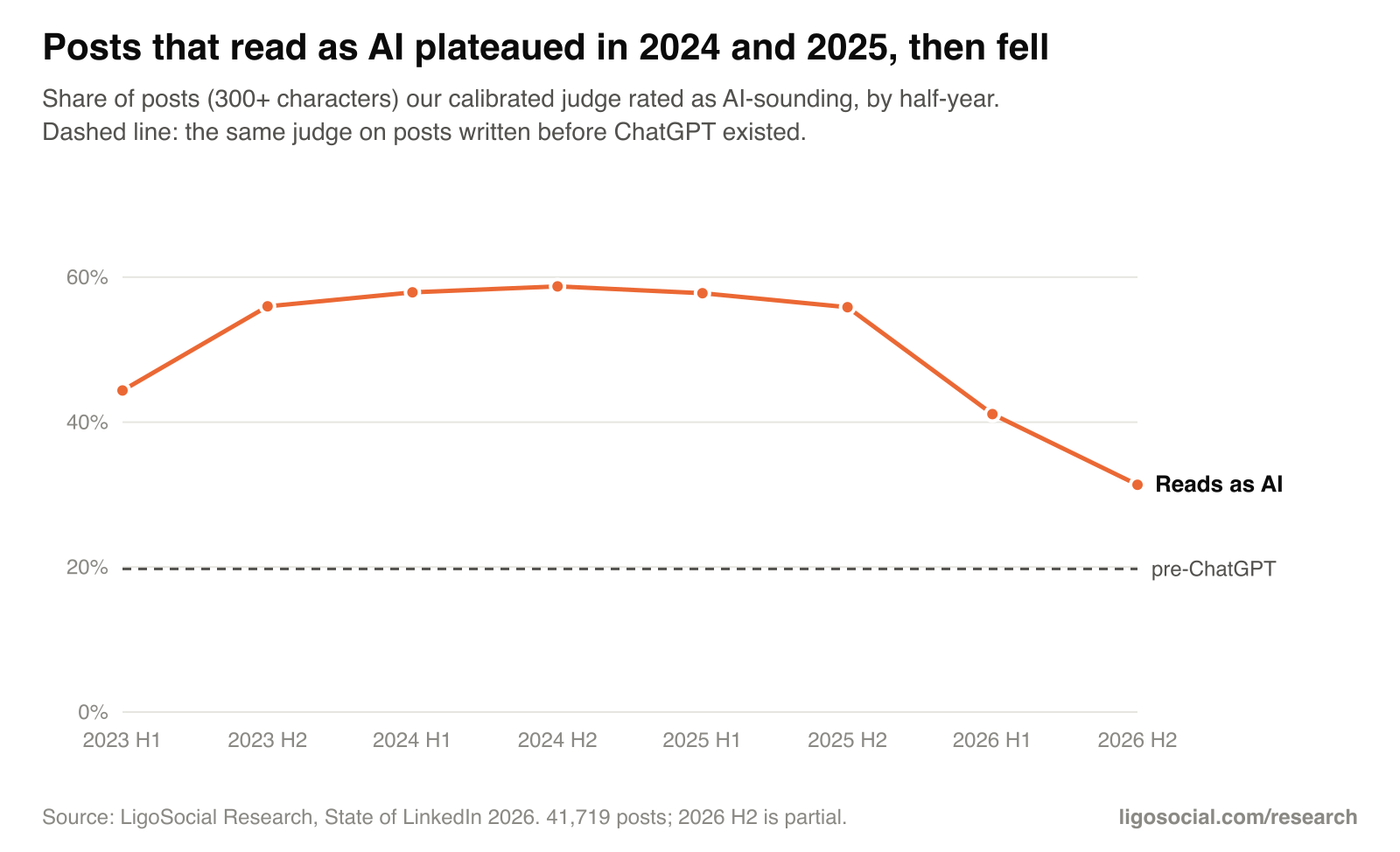
- The share of posts reading as AI rose from 44% (early 2023) to about 59% (late 2024 to 2025), then fell to 41% in 2026.
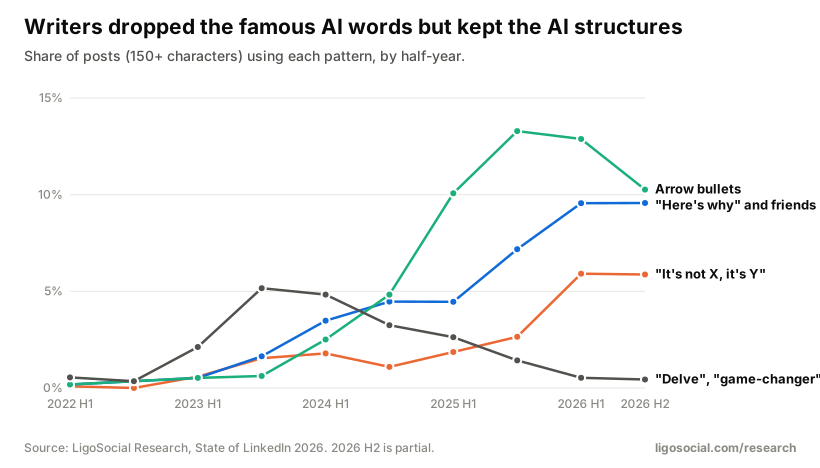
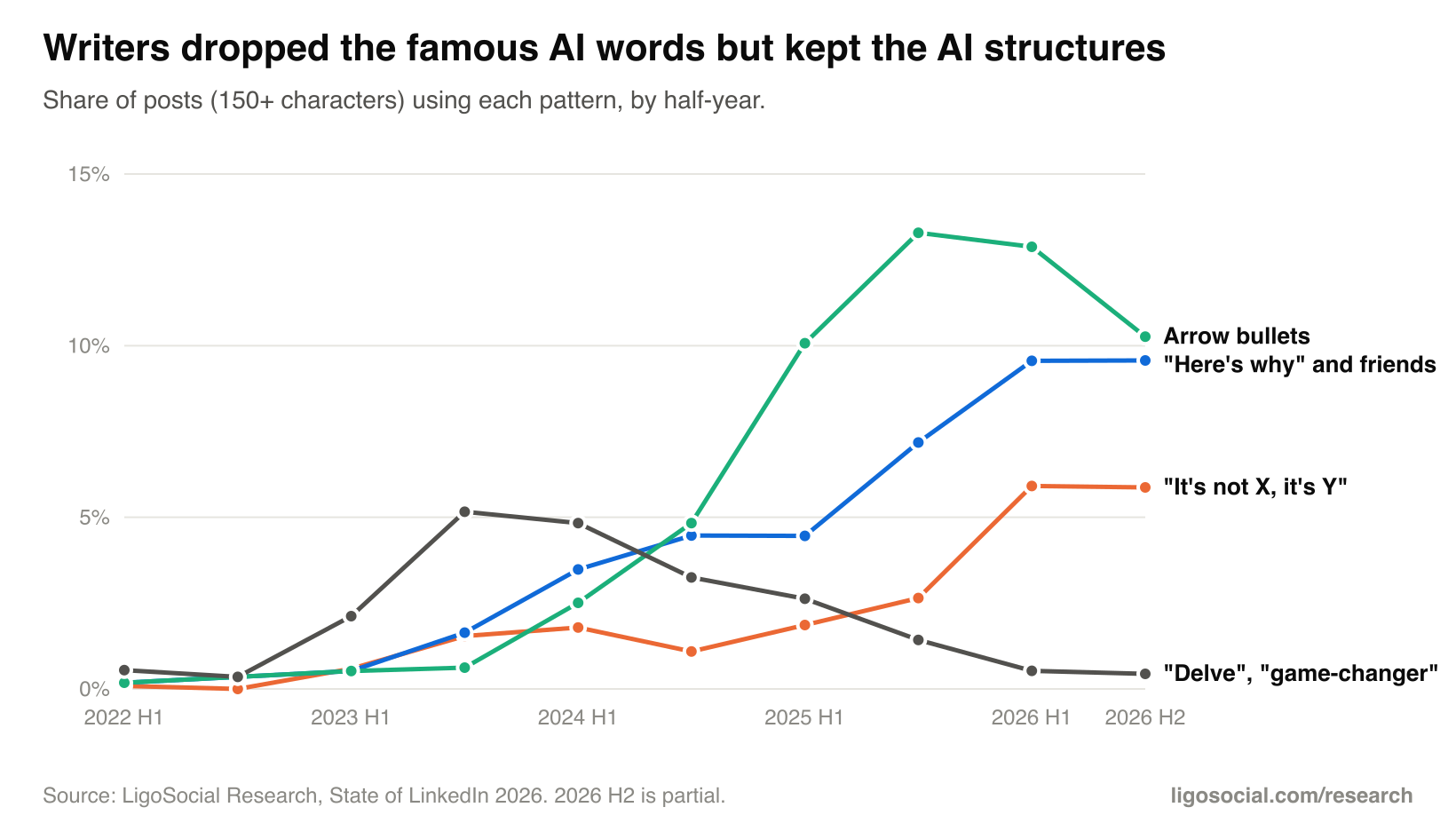
- People deleted buzzwords like "delve" but kept AI structures like "It's not X, it's Y".
Contents
The short answer
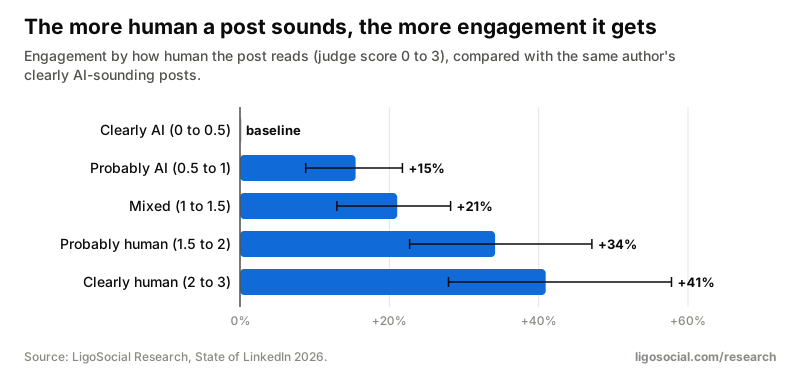
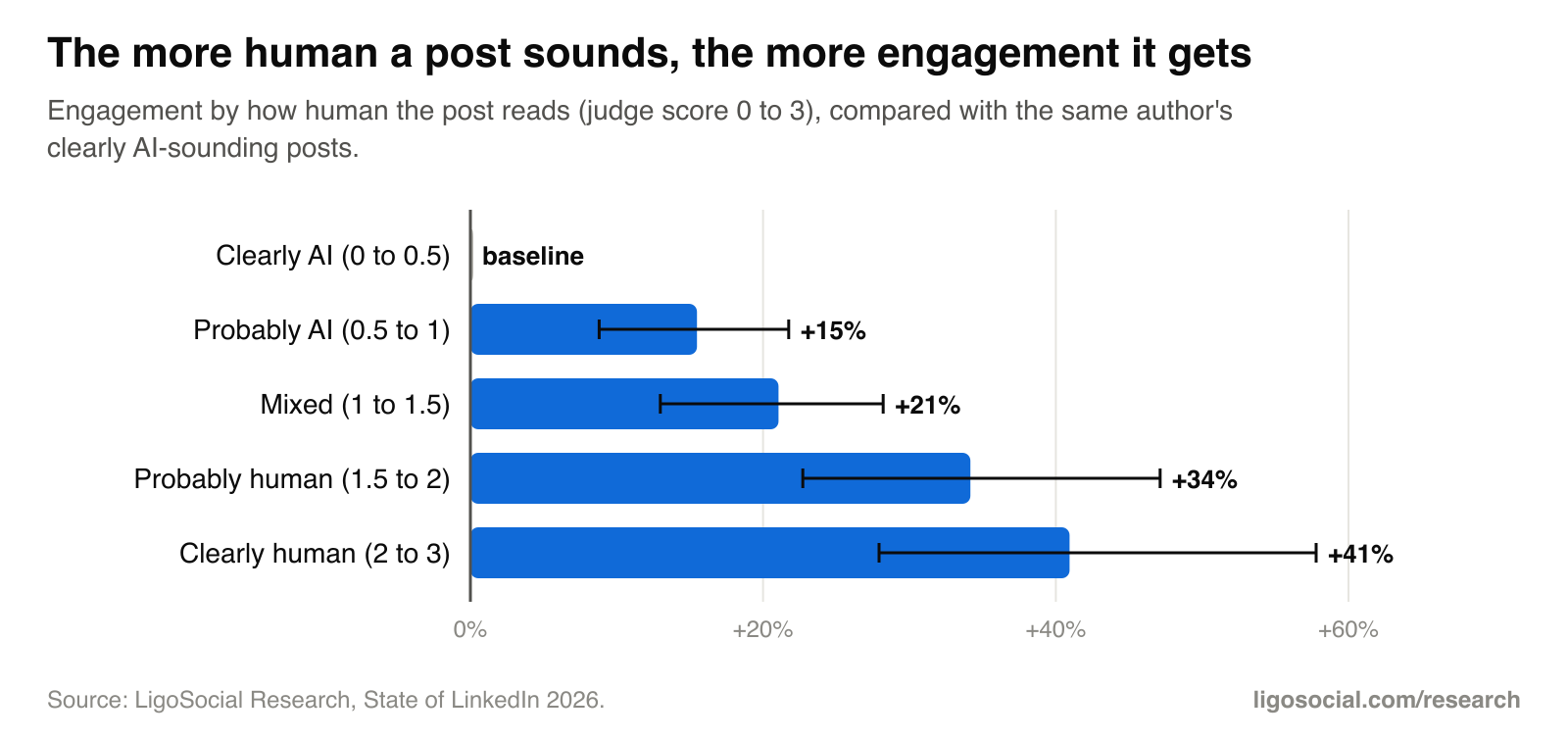
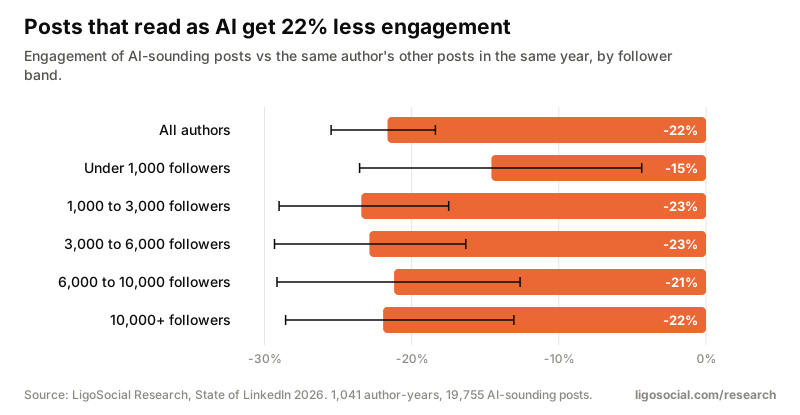
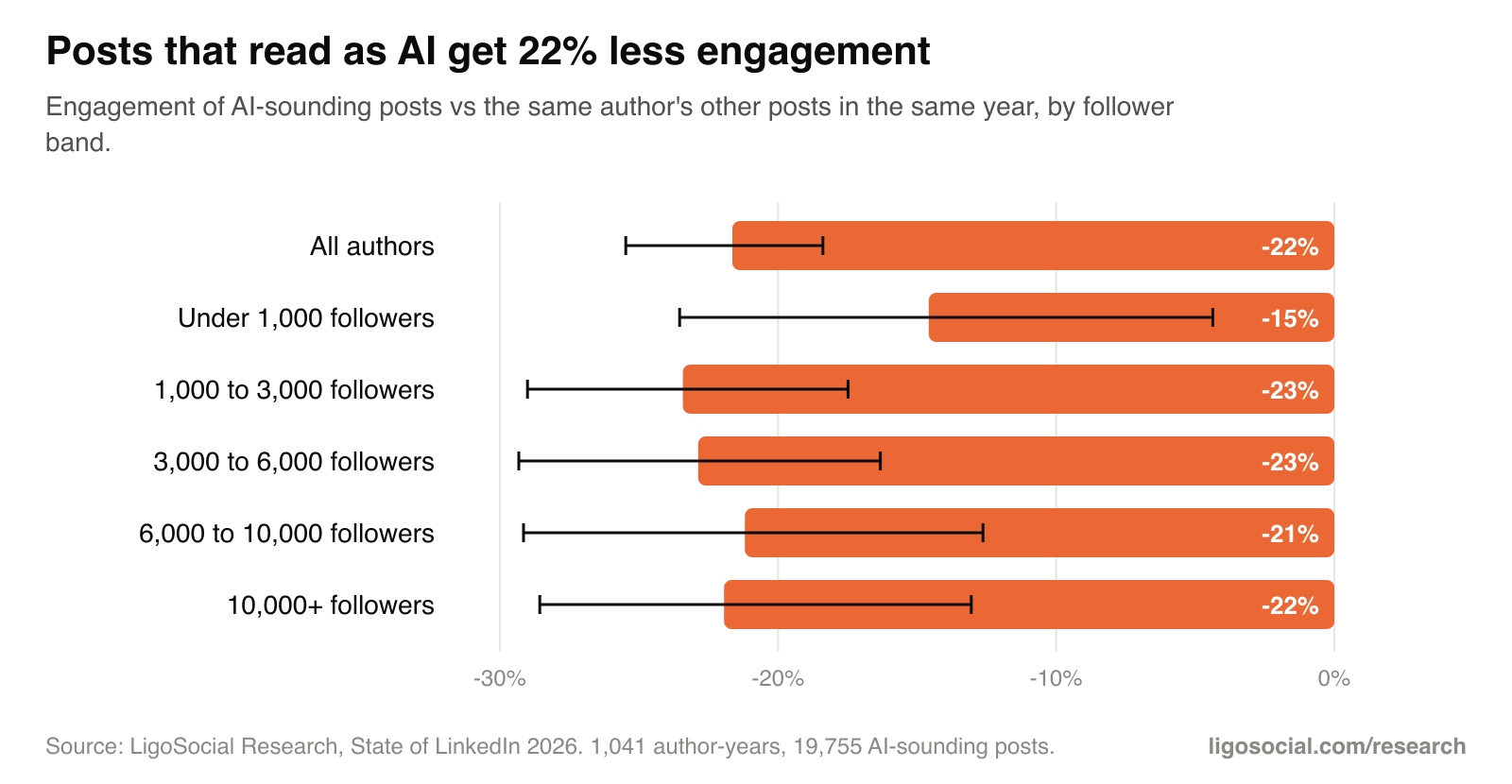
Yes. When the same person posts in the same year, their posts that read as AI get 22% less engagement than their posts that read as human (95% CI -25% to -18%). Comments drop 19% and reactions 20%. Posts that read as clearly human get 31% more.
This is not "LinkedIn detects AI and punishes it". We cannot see the algorithm. What we can see is that readers engage less with posts that sound generated, even from people they already follow.
How we measured "reads as AI"
Nobody can prove who typed a post. So we measured what a reader experiences: does it sound like a person or like a model? We used Jev, a fast AI judge from TypeSafe, with one narrow question scored 0 to 3 (clearly AI to clearly human), and called a post AI-sounding below 0.5 and clearly human at 1.5 or above.
We calibrated it on hand-checked posts (AUC 0.86 on the first 40, 0.99 on a second set of 32 clear cases) and, crucially, ran it on 1,554 posts written before ChatGPT existed. It flagged 20% of them. That is the judge's false-positive floor, and we report it next to every trend. Other studies that claim "X% of LinkedIn is AI" rarely publish this number.
Misclassification works against us: if some "AI" posts are really human and vice versa, the two groups look more alike, so the true gap is probably larger than 22%.
It is not the topic, format or length
-15% / -16%
Finding 3
The AI penalty is not a topic or format effect
The gap holds when we only compare posts of the same type (-15%), the same topic (-16%), or the same format and length (-16%) by the same author in the same year. AI-sounding posts are not losing just because they cover duller subjects.
We also checked each follower band. The penalty shows up in every one of them:
How much of LinkedIn reads as AI
44% to 59% to 41%
Finding 4
AI-sounding posts plateaued in 2024 and 2025, then fell
The share of posts that read as AI went from 44% in early 2023 to 59% in late 2024 and stayed near that level through 2025 (58% and 56%), then fell to 41% in the first half of 2026. The same judge flags 20% of posts written before ChatGPT existed, which is its false-positive floor, so the real excess peaked at about 39 points.
Among authors, the share whose posts mostly read as AI went from 43% (2023) to 57% (2025) and back to 43% (2026).
The tells people remove, and the ones they keep
1.3% to 9.6%
Finding 7
People dropped the famous AI words but kept the AI structures
"Delve", "game-changer" and "ever-evolving landscape" fell from 4.2% of posts in 2023 to 0.5% in 2026. Over the same years "Here's why" style set-ups rose from 1.3% to 9.6%, "It's not X, it's Y" contrasts from 1.2% to 5.9%, and arrow bullets from 0.6% to 12.3%. Writers learned to delete the words everyone mocks, not the rhythm that gives AI away.
Read more in our em dash study.
What to do about it
Does your next post read as AI?
Paste it into the free LinkedIn AI Detector. It scores the post and points at the phrases and patterns that give it away. Nothing you paste is stored.
Post what the data says works, in your own voice
LigoSocial learns how you write from your own LinkedIn posts, then drafts posts, comments and replies in that voice right inside LinkedIn. You approve what goes out.
Add LigoSocial to ChromeOr try it at ligosocial.comCommon questions
- Does LinkedIn penalize AI-generated content?
- We cannot see LinkedIn's ranking system. We can see results: posts that read as AI got 22% less engagement than the same author's human-sounding posts, which fits readers engaging less, whatever the algorithm does.
- How many LinkedIn posts are AI-generated?
- In our sample, 56% of longer posts read as AI in late 2025 and 41% in early 2026, against a 20% false-positive floor. Our authors use an AI assistant, so the average member is likely lower.
- Can I check my own post?
- Yes. Our free LinkedIn AI Detector uses the same judge and thresholds as this study, and lists the patterns that make a post read as AI.
- Is using AI to write LinkedIn posts bad?
- Not in itself. The penalty is for posts that sound generated. Using AI for ideas, structure or editing and keeping your own stories, details and phrasing avoids it.
Download the data
- CSV
Share of posts that read as AI, by half-year
Posts of 300+ characters, calibrated judge, with the pre-ChatGPT false-positive baseline.
9 rows, CSV
- CSV
Post types, openings, topics, traits and the AI penalty
Labelled with a calibrated judge; within-author comparisons.
79 rows, CSV
- CSV
Em dashes and AI writing patterns, by half-year
Share of posts (150+ characters) using each pattern.
12 rows, CSV
Suggested citation
LigoSocial Research (2026). Do AI-written LinkedIn posts get less engagement?. https://ligosocial.com/research/ai-linkedin-posts
Free to reuse under CC BY 4.0: quote the numbers, embed the charts or rework the data, with credit to LigoSocial Research and a link to this page. Every figure is aggregated and anonymised; no individual, profile or post can be identified.
How we collect, clean and anonymise the data: methodology. Questions or a cut we have not published? Ask us.
Related research
- Annual reportThe State of LinkedIn 2026: what works for everyday professionals40 findings from 134,522 posts, plus what works at each follower count.
- ReportEm dashes and AI: how often LinkedIn posts use themEm dash use rose sevenfold, then fell. The dash is a marker, not the problem.
- ReportLinkedIn post formats compared: images, carousels, video, text, links and pollsImages +36%, link previews -15%, polls -50%. Carousels only pay past 10 pages.
- ReportHow long should a LinkedIn post be? What 134k posts showLonger posts win: 2,400+ characters +24% vs 600 to 900.
- ReportDo hashtags work on LinkedIn? What 134k posts showHashtags: no penalty, small lift. Tagging people: +35% to +126%.